What Came Before Modern Witchcraft?
When Shadows Were Power: Remembering Witchcraft Before the Modern Age
Witchcraft, as it is commonly understood today, is often viewed through the lens of modern traditions, named systems, and structured practices. While these forms are valuable and necessary, they represent only one moment in a much longer history. Long before witchcraft was formalized, published, or openly reclaimed, it existed as a practical and lived relationship with unseen forces, woven directly into daily life rather than separated from it. When Shadows Were Power: Witchcraft’s Forgotten Dawn by Dyrk D’Raven is a work dedicated to exploring that earlier landscape, not to dismiss what came later, but to understand the roots from which modern practice emerged.
This blog post accompanies a video exploration of the book and offers further context for readers who wish to go deeper.
Witchcraft as Lived Practice
In its earliest forms, witchcraft was not defined by belief statements or formal religious identity. It functioned as applied knowledge shaped by necessity. Healing the sick, protecting the household, interpreting signs, and influencing uncertain outcomes were not abstract spiritual pursuits. They were responses to the realities of daily life. Early practitioners did not work within named traditions, and they were rarely set apart from their communities. They were known by reputation rather than title and were sought out because something needed to be done.
When Shadows Were Power explores this practical orientation in detail, showing how ritual actions were direct and purposeful, tools were ordinary objects given meaning through use, and ethics were shaped by consequence rather than doctrine. Magic was not divided into rigid categories of good and harmful intent. It was judged by effectiveness and responsibility within a local context. This perspective allows early witchcraft to be understood without romanticizing or oversimplifying it.
Knowledge Without Text
A defining characteristic of early witchcraft was how knowledge moved from one person to another. It was rarely written down and instead passed through demonstration, repetition, and shared experience. A gesture learned by watching. A charm remembered through rhythm. A remedy refined through years of observation. This form of transmission created deep practical understanding, but it also made knowledge vulnerable to disruption.
Dyrk D’Raven addresses this vulnerability directly, acknowledging that much was lost not through erasure alone, but through the fragility of oral and experiential traditions. As social structures changed and pressures increased, the conditions that supported informal transmission began to disappear. This loss did not signal the failure of early witchcraft. It revealed its humanity.
Continuity Through Change
Rather than framing history as a rupture, When Shadows Were Power presents witchcraft as a living continuum shaped by circumstance. As older modes of practice became increasingly difficult to sustain, new forms emerged that could preserve what remained. Structure, shared language, and formal teaching became tools of survival rather than symbols of departure.
Modern traditions, including Wicca, arose in response to a world that no longer supported unspoken practice. They provided coherence, accessibility, and safety at a time when openness was finally possible again. Recognizing this does not diminish earlier practices. It contextualizes them. The book treats modern developments not as replacements, but as necessary adaptations shaped by their historical moment.
Why This History Matters Now
Looking back is not an attempt to abandon the present. It is a way of understanding it more fully. When witchcraft is reduced to either ancient fantasy or modern reinvention alone, depth is lost. Context fades. Practice risks becoming disconnected from the realities that once gave it meaning.
By examining witchcraft before formalization, When Shadows Were Power restores nuance to the conversation. It reminds readers that magic was once inseparable from daily life, community responsibility, and survival. This understanding enriches both historical study and contemporary practice, offering a grounded perspective that avoids nostalgia and dismissal alike.
About the Book and the Video
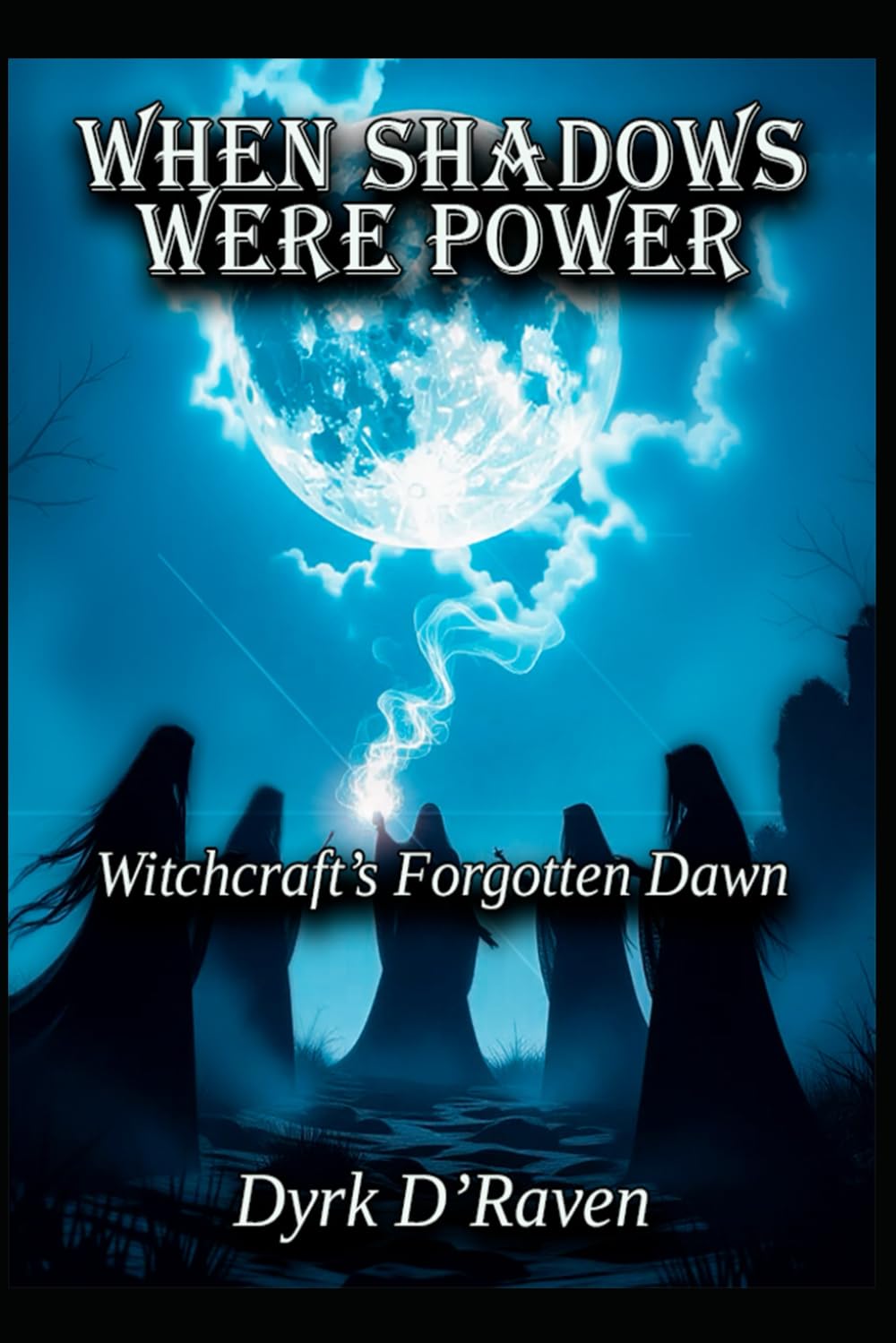
The book is written by Dyrk D’Raven and is available on Amazon.
Some histories are not lost to time. They remain present in quiet practices, inherited instincts, and the questions we continue to ask about where we come from and why it still matters.
At Shadow’s Charm we have just launched our new YouTube channel where we explore goddess lore, Southern and Northern Hemisphere witchcraft, practical spellwork, book deep dives, and behind the scenes looks at my writing process. If you enjoy these blog posts and want to journey even deeper into the magic, I invite you to subscribe and join our growing circle. Every week we will share new videos designed to inspire, guide, and empower your practice. Your support helps the channel grow and allows us to create even more witchcraft content for our community.
Click for our facebook page : Click for our Pinterest Page : Click for our X page
Click for our Bookbub page : Click for our youtube account : Click for our Goodreads Profile


Comments
Post a Comment